 Spring
Fresh routines and gentle movement
- Accessible park walks
- Gardening or planting flowers
- Farmers markets
- Light outdoor exercise
Plan for rain, allergies, muddy paths, changing routines, and sensory comfort as the weather shifts.
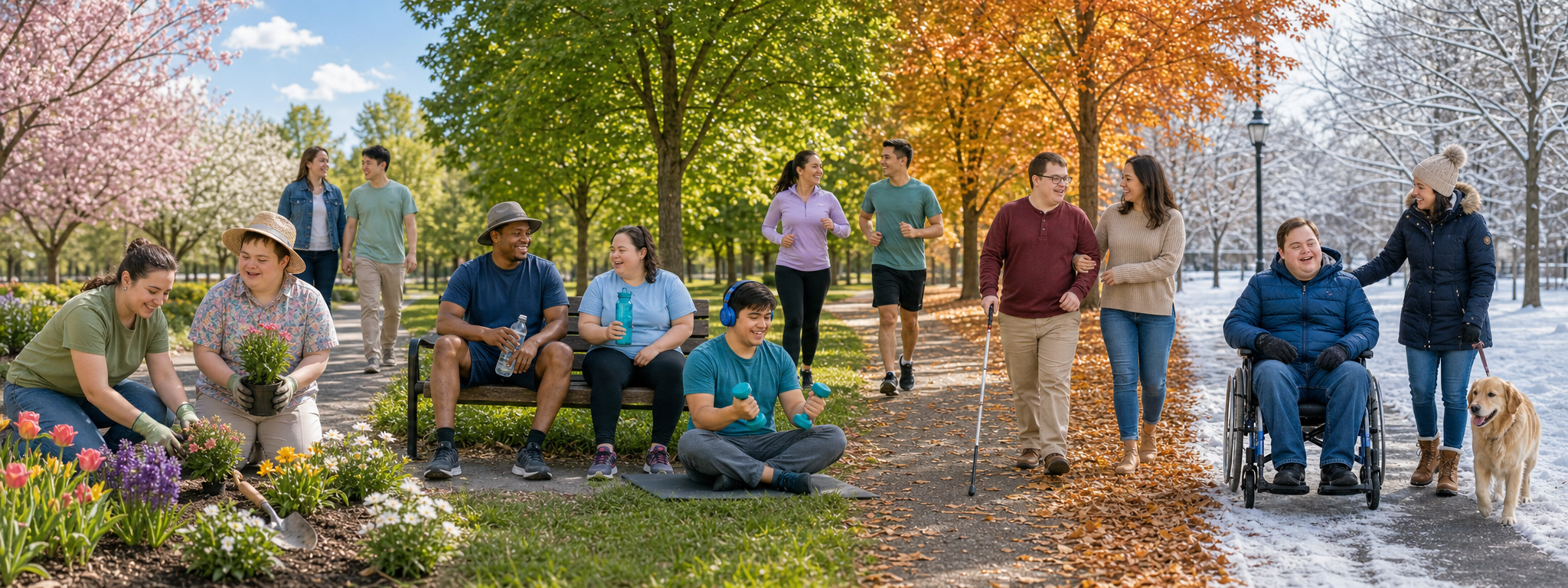
Every season brings opportunities for movement, connection, and choice. Thoughtful planning helps people with Down syndrome, autism, IDD, developmental disabilities, and acquired brain disorders enjoy the year with dignity.
Weather, daylight, routines, sensory needs, mobility, and health conditions can all affect how a person experiences the seasons. Support should begin with what the person enjoys, what helps them feel comfortable, and what keeps them safe.
For someone with Down syndrome, autism, an intellectual or developmental disability, or an acquired brain disorder, a good seasonal plan may include pacing, sensory-friendly options, sun protection, warm clothing, hydration, transportation planning, and clear communication.
This page is general education, not medical advice. Families, guardians, staff, and providers should follow each person's care plan and healthcare guidance.
The best seasonal activities are flexible, accessible, and matched to each person's energy, communication style, and comfort level.
SpringPlan for rain, allergies, muddy paths, changing routines, and sensory comfort as the weather shifts.
 Summer
Use sunscreen, sunglasses, hats, water, shade, and shorter outings when heat or humidity is high.
 Fall
FallWatch for wet leaves, uneven walkways, cooler evenings, earlier darkness, and changes in daily rhythm.
 Winter
Plan layers, gloves, safe footwear, transportation, medication access, charged devices, and extra time on icy days.
People may show discomfort in different ways. A seasonal plan should include observation, clear communication, and room to change the activity when needed.
Check temperature, clothing, sensory needs, fatigue, pain, and whether the person wants a break.
Use plain language, visuals, choices, extra time, or preferred communication tools before and during activities.
Plan hydration, medications, meals, appointments, mobility needs, and any provider-specific instructions.
Think about weather, accessible parking, icy paths, heat, backup rides, and safe return plans.
Offer options. A safe seasonal plan should still respect what the person enjoys and wants to do.
Keep contact numbers, supplies, chargers, water, snacks, and support instructions easy to find.
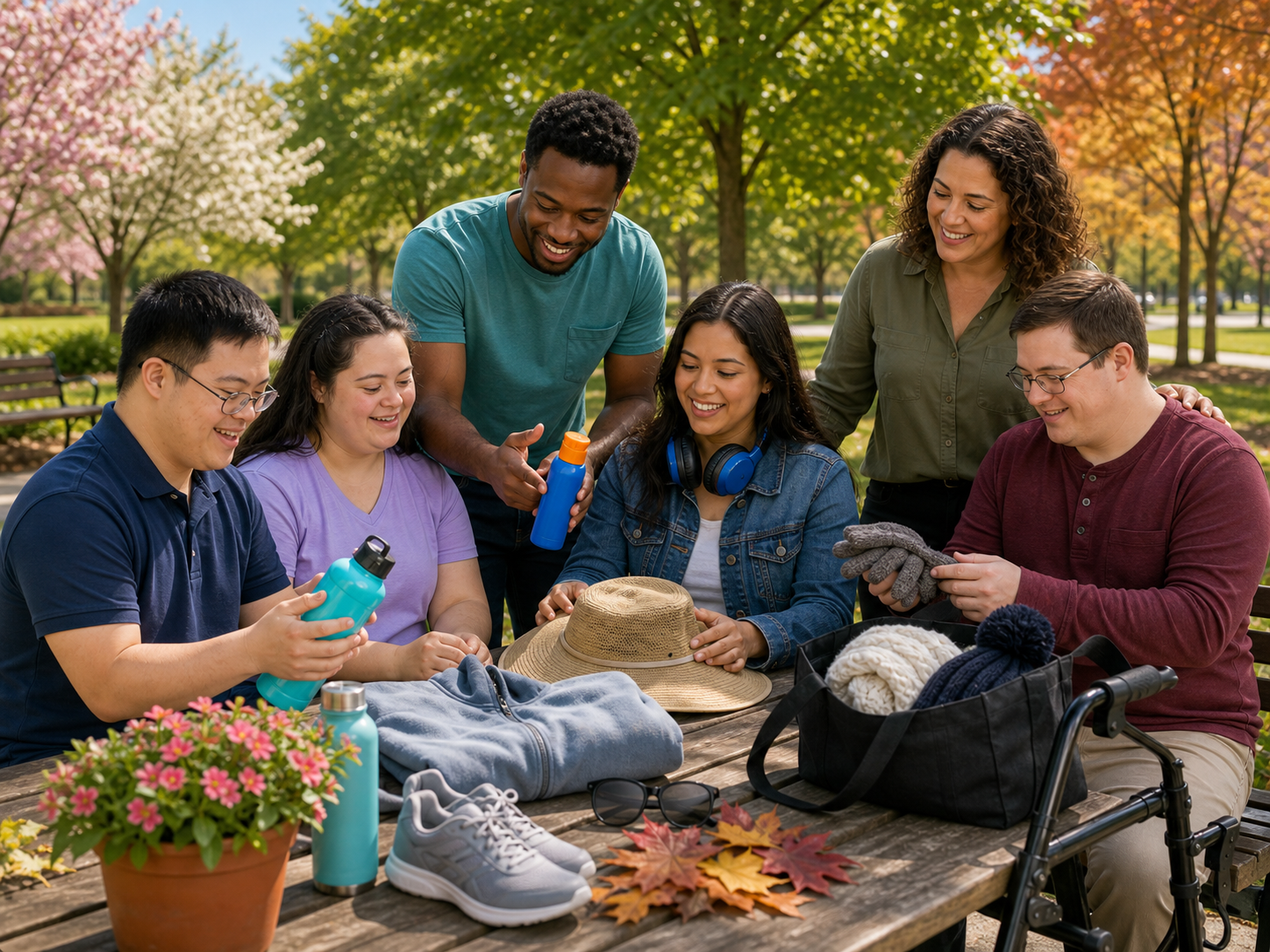
Seasonal planning helps turn everyday activities into safer, more comfortable experiences. That can mean cooling breaks in summer, layers in winter, backup plans during storms, or quieter options when a busy event feels overwhelming.
The goal is not to avoid the seasons. The goal is to support each person so they can participate in ways that feel safe, respectful, and meaningful.
Ask about support