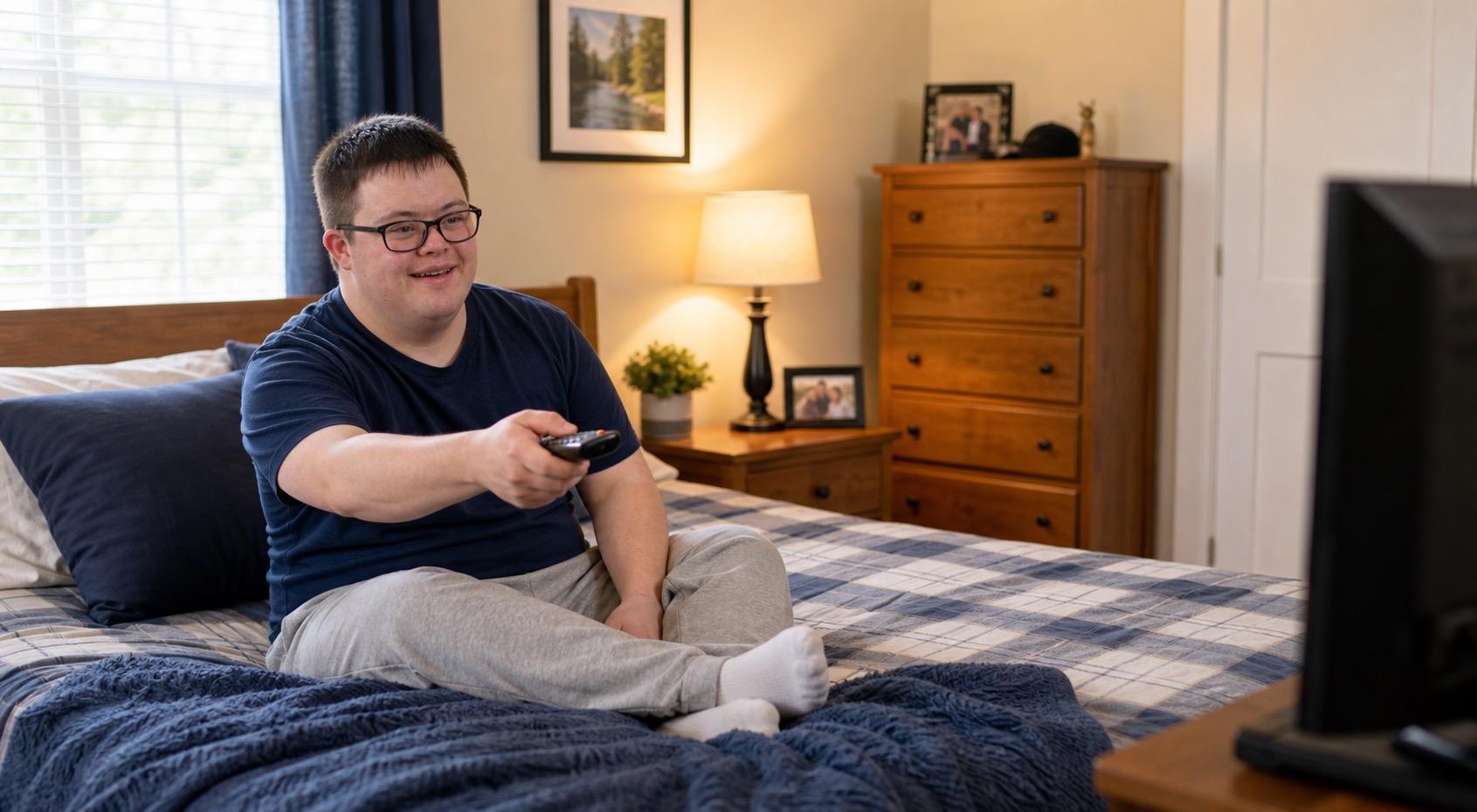
Adult with Down syndrome watching TV in a bedroom
Home support

Residential Services

Residential Services provide safe, comfortable home settings where daily routines, belonging, and independence can grow.

Service detail

Residential Services at a glance.

Residential Services are built around home life, personal routines, privacy, safety, and the level of support each person needs day to day.

Support can include

Personal care, hygiene, dressing, meal preparation, cleaning, laundry, budgeting, appointments, wellness routines, errands, recreation, and household problem-solving.

BelongingDaily living skillsSafetyIndependenceComfortable routines
What it includes

Practical support, shaped to the person.

  • Personal care routinesSupport can include hygiene, dressing, grooming, and morning or evening routines while protecting dignity and privacy.
  • Meals and household tasksIndividuals receive help with meal preparation, healthy choices, cleaning, laundry, and shared home responsibilities.
  • Wellness follow-throughStaff can assist with medication reminders, appointments, wellness routines, documentation, and care-team communication.
  • Community participation from homeResidential support can include errands, visits, events, recreation, and other ways to stay connected beyond the home.
  • Safety and problem-solvingSupport includes planning around household safety, routines, problem-solving, and consistent follow-through.
  • Respect for personal lifeSupport is shaped around privacy, preferences, relationships, personal space, and what makes the home feel like home.
Focus areas

How support shows up day to day.

  • Comfort and belongingHome supports are designed to feel personal, familiar, and respectful of privacy, routines, and relationships.
  • Daily living assistanceSupport is matched to the person’s needs, from reminders and coaching to hands-on help when required.
  • Household skillsIndividuals can practice cleaning, laundry, meal routines, organization, budgeting, and problem-solving at home.
  • Shared home routinesMeals, chores, rest, recreation, and evening routines are supported in ways that build confidence and independence.
  • Appointments and community lifeStaff help plan transportation, appointments, errands, recreation, visits, and community participation.
  • Team communicationWhen appropriate, staff keep families, guardians, supervisors, and care teams informed about needs and changes.
Home care support

Home care providers help daily life feel steady, personal, and comfortable.

Home care providers support everyday routines inside the home while respecting privacy, preferences, and the person’s own way of doing things. The goal is not to take over the home, but to make daily life safer, calmer, and more independent.

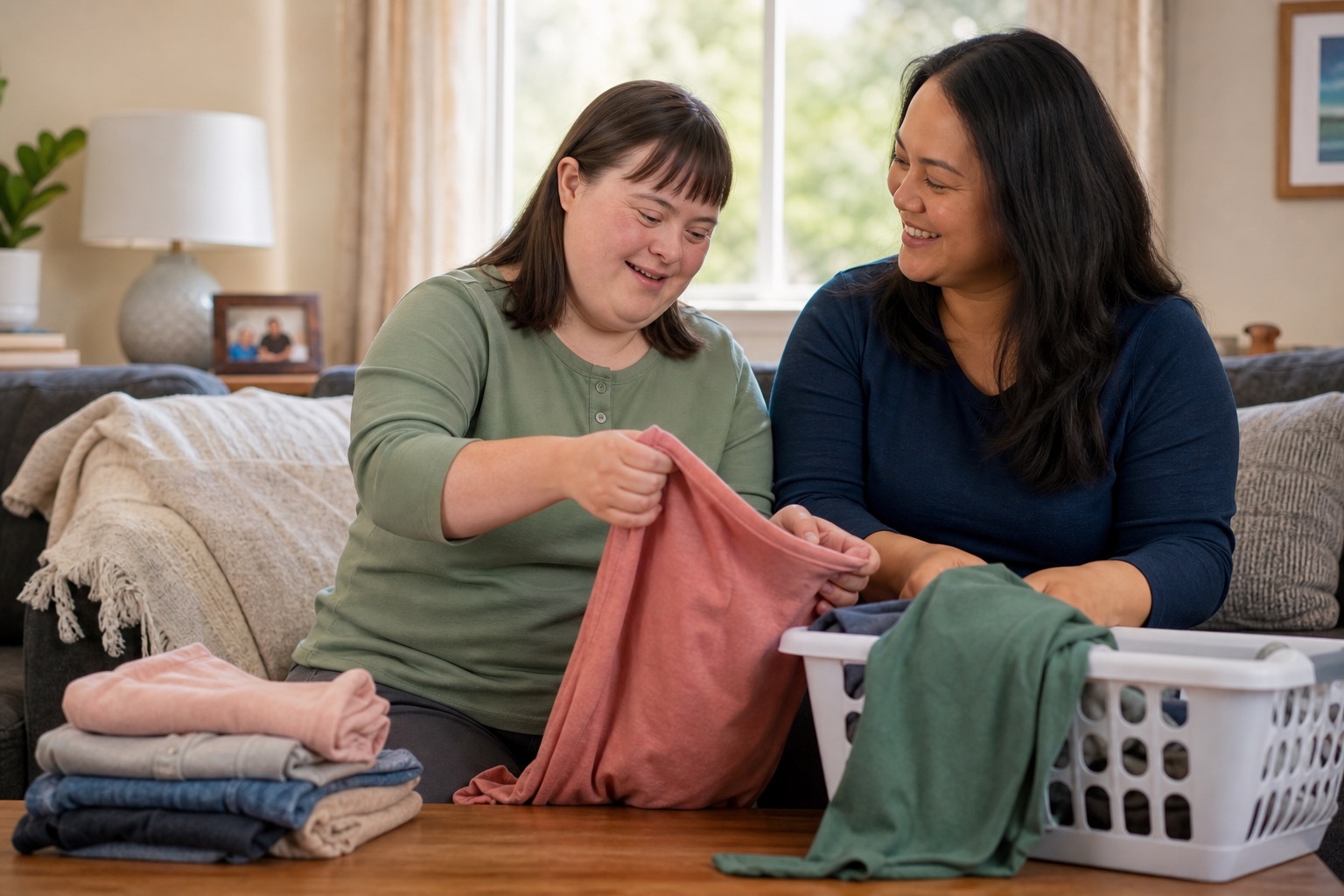
Home care provider folding laundry with an adult woman with Down syndrome in a living room
Residential support works best when the person remains involved in the rhythms of home life, from choices and chores to rest and recreation.
  • Morning and evening routinesProviders help with hygiene, dressing, meals, reminders, and transitions through the day in ways that protect dignity.
  • Home activities and choresLaundry, cleaning, organizing, cooking, and shared responsibilities can become chances to practice skills and confidence.
  • Personal choice at homeSupport includes giving space for preferences around clothing, food, activities, privacy, relationships, and routines.
  • Safety and wellnessProviders notice changes in comfort, health, mood, or safety and help follow care plans, appointments, and household routines.
  • Community from homeSupport may include errands, visits, recreation, appointments, and plans that help the person stay connected.
  • Family and care-team updatesWhen appropriate, providers share practical updates so families, guardians, supervisors, and care teams stay aligned.
Adult with Down syndrome watching TV in a bedroom
HumanLinkcare approach

Support that respects routines, choices, and goals.

HumanLinkcare works with the individual, family members, guardians, caregivers, and support teams to understand what matters most. The service plan can adapt as needs, routines, preferences, and goals change.

Talk with us about fit
Next step

Have questions about residential services?

Tell us about the person's needs, goals, routines, and current supports. We will explain the available options clearly.

Start a service inquiry